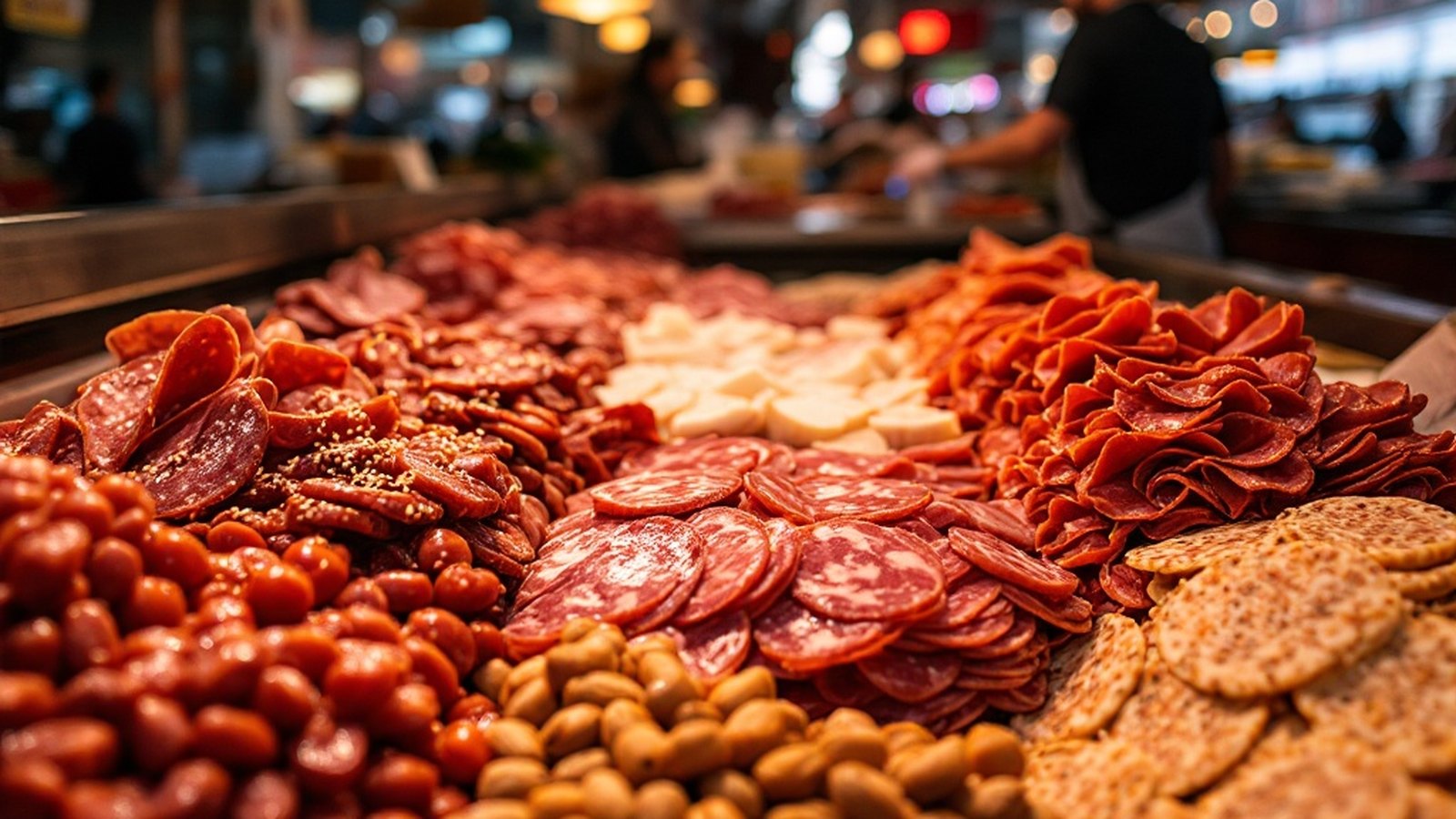
Walk into any serious Italian deli on or near 9th Street and the counter hits you before the smell does — a long glass case packed tight with ropes of soppressata, fat logs of mortadella, the deep-rust coils of capicola, and wedges of provolone ranging from pale gold to near-amber. It is not a menu. It is a vocabulary. Learning to read it is half the education.
Start with the cure, not the name
The first thing a South Philly regular does at the deli counter is look at the cut face of whatever is in the case.
The first thing a South Philly regular does at the deli counter is look at the cut face of whatever is in the case. Color, grain, and fat distribution tell you more than the label. Prosciutto di Parma should be a delicate coral, the fat creamy-white and evenly distributed — if it looks dry or the fat has gone translucent and gray, it's been sitting. Good soppressata shows deep red meat and clear white fat in distinct nuggets; the Calabrese version will have a visible flush of red pepper throughout. Capicola (sometimes spelled capocollo, often just called "coppacol" behind these counters) should feel supple, not stiff — it comes from the neck and shoulder, and a proper dry cure leaves it firm but yielding, never leathery.
Mortadella is the counterintuitive one. It's cooked, not dry-cured, and it comes from Bologna — but no serious Italian deli counter skips it. Look for the pistachio-studded version; the pale, pistachioless domestic substitute is a different animal entirely. Ask for it sliced thick enough to fold, not shaved.
Bresaola sits apart from the pork products: air-dried beef, lean and dark, served in translucent slices. It's the most restrained thing in the case and often the least familiar to new customers. Order it and you'll get a raised eyebrow of approval from whoever's working the counter.
How to order (and how not to)
The cardinal rule: never ask for "a pound of prosciutto." The person behind the counter will slice it, but they'll also know you don't eat this way. A quarter-pound of prosciutto, sliced thin to order, is the right quantity for most purposes — enough for an antipasto spread or to fold over sliced melon without waste. Soppressata and capicola you can buy by a half-pound; they hold in the refrigerator and the flavor only deepens on day two.
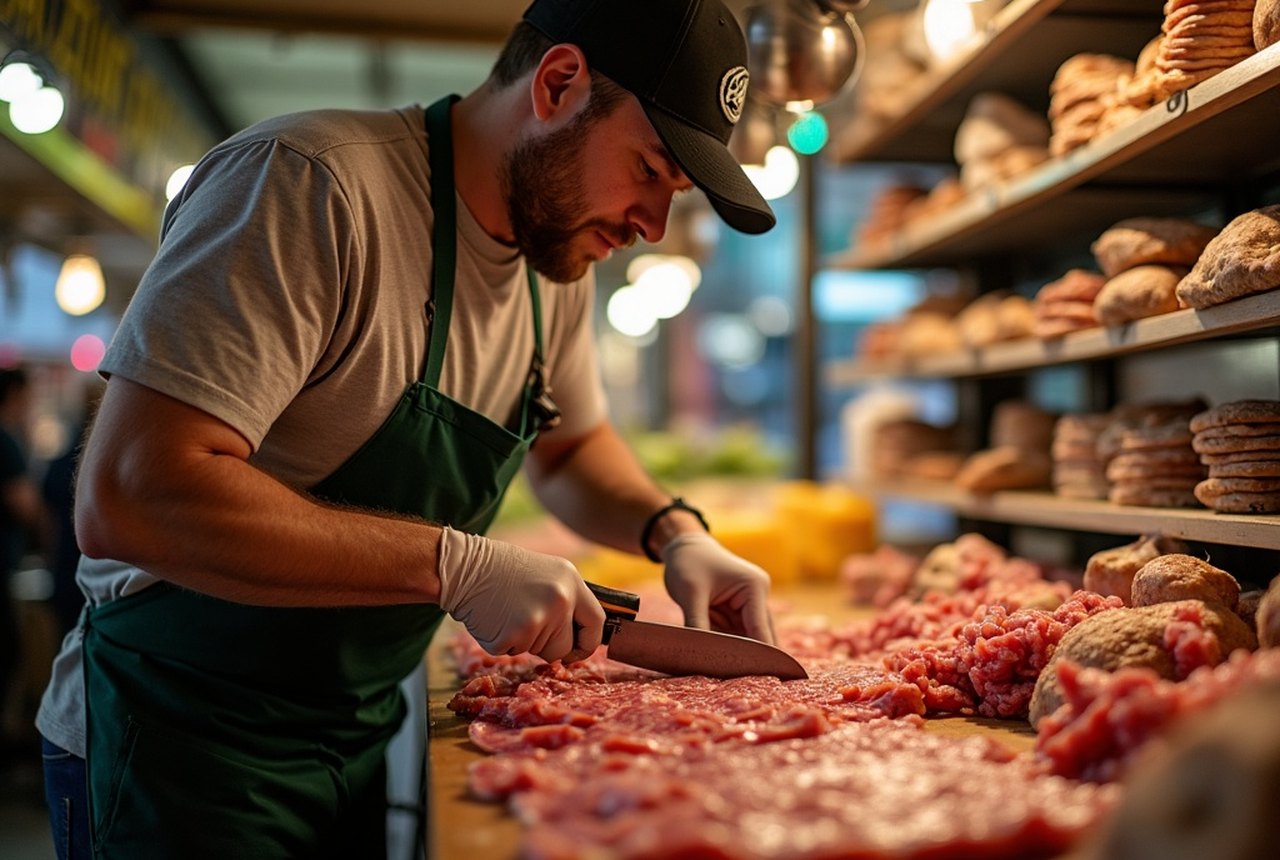
Thickness is the other variable. On 9th Street, you are expected to have an opinion. Prosciutto goes paper-thin. Mortadella and provolone go medium — thick enough to taste, thin enough to layer. Pancetta, the salt-cured pork belly used in cooking rather than eating out of hand, goes thicker still, cut into slabs or cubed. If you stand at the counter without specifying, a seasoned counter worker will ask; a less patient one will make the call for you. Neither outcome is catastrophic, but knowing what you want earns you a different kind of respect.
Provolone deserves its own attention. The domestic version is mild and rubbery; the imported piccante has been aged considerably longer and carries a sharp, almost funky edge. Ask which one is behind the case before you order — the difference is not subtle, and the right choice depends entirely on what you're building.
What you're really buying
The deli counter at a good Italian market is a direct line to the logic of Italian preservation — the idea that salt, air, and time are sufficient technology to turn raw pork into something that lasts and intensifies. That tradition arrived in South Philadelphia with the immigrants who settled the neighborhood in the late nineteenth and early twentieth centuries, and it never entirely left. The specific producers have changed over the decades, domestic and imported products have traded places in the case depending on import rules and supplier relationships, and Boar's Head has crept into a few spots where it doesn't entirely belong — but the core logic remains.
Stand at the counter, look at what's in the case, and ask questions. The people who've worked these counters for years have strong opinions about what's good right now, and they will share them freely. That exchange — customer and counter, specific and unhurried — is precisely what makes a salumeria something a supermarket will never replicate.