From the Mezzogiorno to South Philly
The story of the 9th Street Italian Market begins not on 9th Street but on the docks of Naples, Palermo, and Bari — and in the bone-dry hillside villages of Calabria, Sicily, Campania, and Abruzzo. Beginning in the 1880s, southern Italians fled a punishing combination of crop failures, crushing taxation under the newly unified Italian state, and a feudal land system that left contadini — peasant farmers — with almost nothing to show for a season's work. Between 1880 and 1920, more than four million Italians entered the United States. A significant stream of them followed a well-worn chain migration south from the Port of Philadelphia into the rowhouses below Washington Avenue.
They came from specific towns, and they landed on specific blocks — a pattern that shaped South Philly's geography for generations. Sicilians clustered near one corner; Abruzzesi near another. You could walk two blocks and hear a different dialect. The neighborhood that formed was dense, loud, and intensely local — a patchwork of campanilismo, the old-country habit of trusting your own village first.
The Pushcart Economy
Walk 9th Street on a Saturday morning and you are walking through the direct consequence of that arrival.
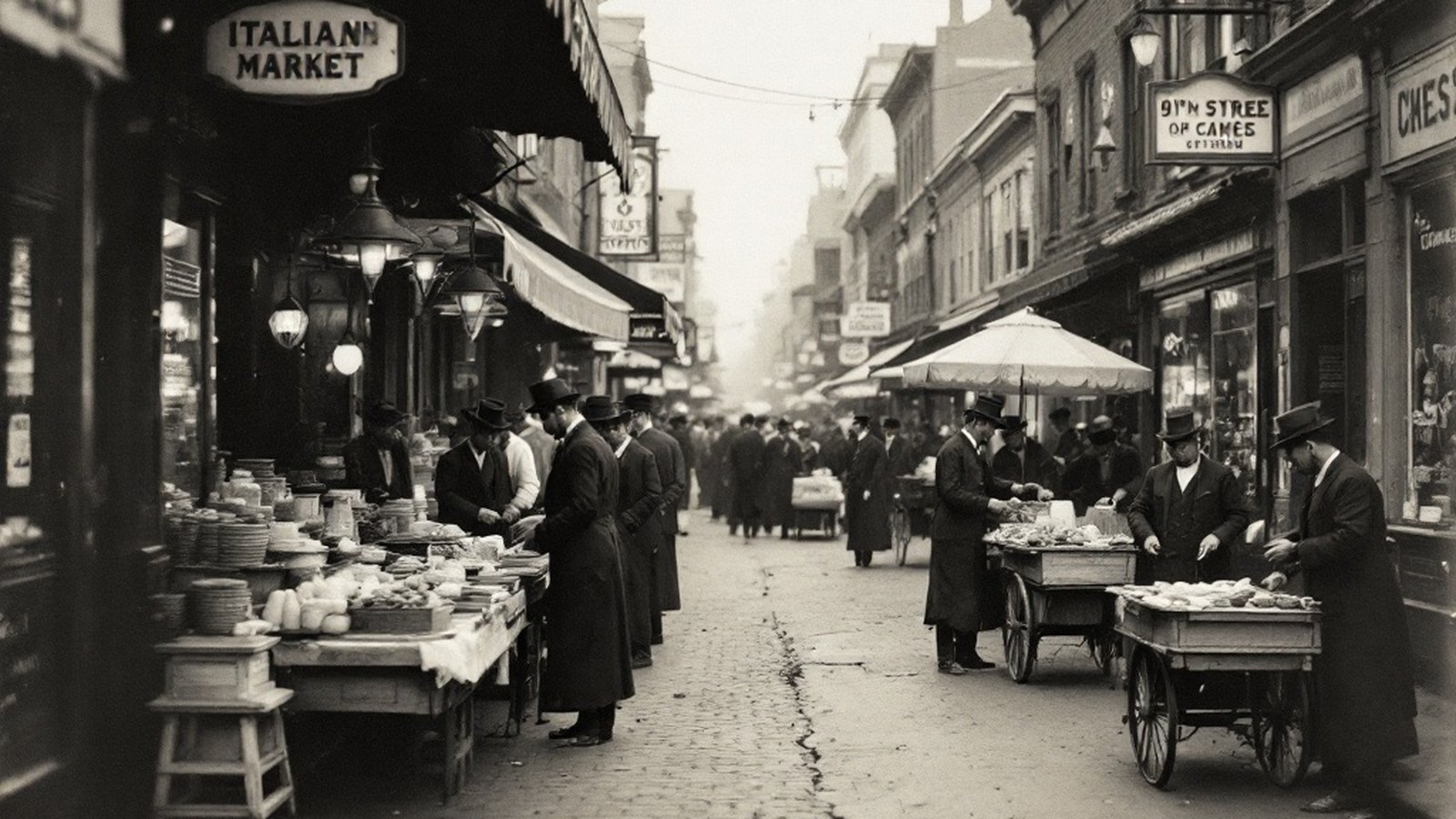
Work, for most new arrivals, meant physical labor — rail yards, construction, the docks. But the streets themselves also became a marketplace. By the late 1880s and into the 1890s, immigrant vendors began working the blocks around 9th Street, selling produce, dried goods, and fish from pushcarts and wooden stalls. The arrangement was practical and cheap: no lease, no overhead, just a cart, a wholesale run to the produce sheds, and a pitch on the pavement.
The market took shape organically on 9th Street between Christian and Washington, though vendors spilled north and south as the trade grew. The foods on those carts mirrored the larder of the Mezzogiorno — sharp provolone, dried salt cod (baccalà), lupini beans, loose pasta, olive oil sold by the ladleful. These were pantry staples that new arrivals needed to cook the way their mothers had cooked, and the vendors who supplied them were building something more than a commercial strip. They were building a community infrastructure.
By the turn of the twentieth century, the Market had become a living directory of South Philly's immigrant life. A family new off the boat could walk 9th Street and hear their own dialect, find their regional salume, and learn who was hiring. The transactions were small; the social function was enormous.
The Blocks Around Palumbo's
A few blocks west of the Market stalls, along Catherine Street, Frank Palumbo opened what would become a neighborhood institution — a restaurant and entertainment venue that, through the first half of the twentieth century, drew performers and politicians alike and anchored the social life of the Italian quarter. Palumbo's became a symbol of what the community had built: from pushcart to prosperity, from tenement to banquet hall.
The blocks around it told the same story in bricks and mortar. Churches like Saint Paul's anchored the spiritual life of specific immigrant groups; the mutual aid societies — the Sons of Italy and dozens of smaller village-based fraternal organizations — handled the practical crises: a death in the family, a lost job, a sick child when there was no savings to draw on. The Market and these institutions reinforced each other. Commerce sustained the neighborhood; the neighborhood sustained the commerce.
What Took Root
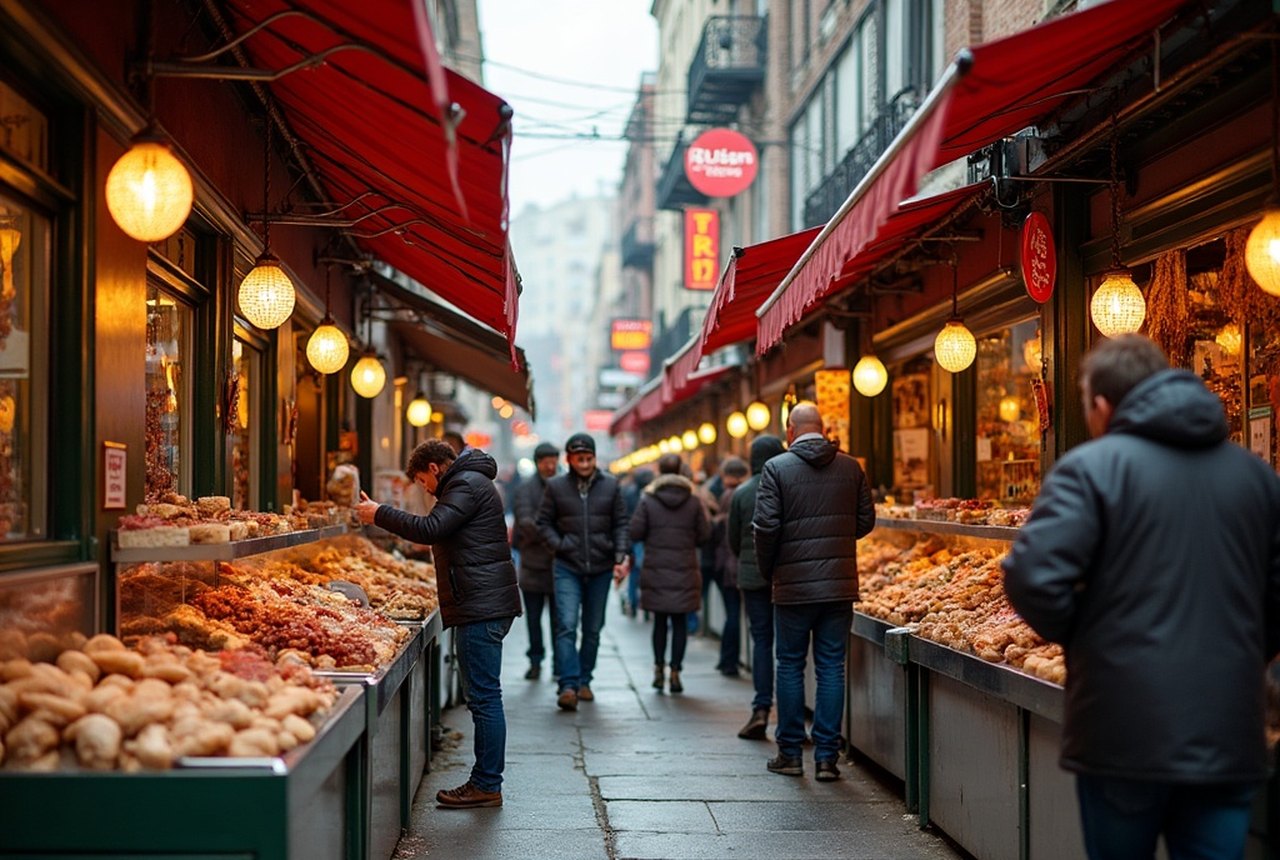
What the 1880s generation built on 9th Street was never just a place to buy food. It was a system — economic, social, and deeply cultural — for surviving and then thriving in a new country without surrendering everything left behind. The pushcart gave way to the stall, the stall to the storefront, the storefront to multi-generational family businesses that still operate today. The open-air format never changed, because it didn't need to. The model worked from the first day a vendor unfolded a wooden plank and set out a pile of eggplant on the cobblestones, and it still works now. Walk 9th Street on a Saturday morning and you are walking through the direct consequence of that arrival.
- 1880ssouthern Italian immigration accelerates; pushcart vendors begin working 9th Street
- late 1880s–1890sinformal market takes shape between Christian and Washington Streets
- early 1900sstalls consolidate; market recognized as established commercial strip
- mid-20th centuryPalumbo's at height of influence; Market storefronts dominate the blocks