The Vendors Who Stayed
The supermarket was supposed to kill it. When the A&Ps and Acmes multiplied through postwar Philadelphia and the row-house families began their slow drift to Jersey and the Delaware County suburbs, the conventional wisdom was plain: the outdoor stalls on 9th Street were a relic. Parking was impossible. The hours were inconvenient. The future was fluorescent lighting and frozen food.
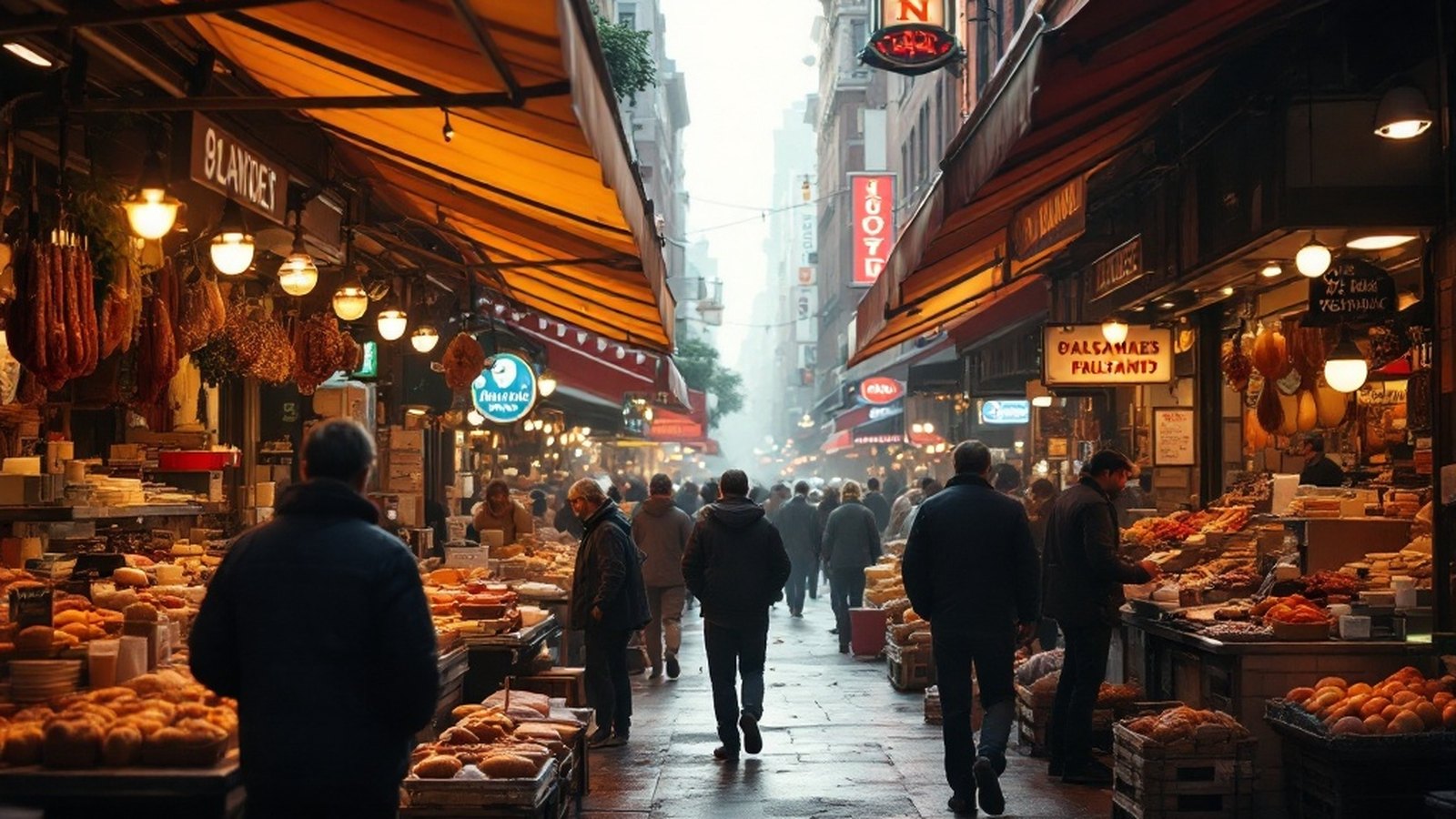
The vendors stayed anyway — and so did enough customers to matter. What the supermarket could not replicate was density. On a single block of 9th Street you could argue with a cheese man about whether the provolone was sharp enough, buy a pork roast from an in-house butcher who knew your father, and walk out with everything you needed for Sunday sauce and nothing you didn't. That compression of expertise, carried in families across generations, proved stubbornly attractive in ways that a loyalty-card program couldn't touch.
A Century of Staying Power
By the time the food-culture revival of the 2000s arrived, the market didn't need reinvention.
The market's roots run to the late nineteenth century, when Italian immigrants — most of them from southern regions like Abruzzo, Campania, and Sicily — established stalls on 9th Street between Christian and Washington. They were selling to people who cooked like they did and knew the difference. That specificity became the market's armor. It was never trying to be everything to everyone. It was trying to be exactly one thing, very well, for the people who needed it.
Urban renewal threatened in the mid-twentieth century, and the crack epidemic hollowed out blocks of South Philly in the 1980s. Each decade handed the market a plausible reason to fold. It didn't. Longtime institutions held the anchor points — the kind of longevity that makes new neighbors curious rather than skeptical. By the time the food-culture revival of the 2000s arrived, the market didn't need reinvention. It needed only to be rediscovered, which it was, by a new generation of cooks willing to walk past a parking problem to find dried pasta imported from Campania and a ricotta they couldn't get anywhere closer to home.
What survives here isn't nostalgia preserved in amber. It's a working market, open most mornings, smelling of sawdust and citrus and cured meat, making its argument one transaction at a time. The obituaries keep getting filed. The curb stands keep opening.
la cronologia- Late 1800sItalian immigrants establish market stalls on 9th Street
- Post-WWII erasupermarket expansion and suburban migration threaten foot traffic
- 1980scrack epidemic damages surrounding South Philly neighborhoods
- 2000sfood-culture revival brings new generation of shoppers to the market